

Author: Julia Müller
Scientific Review: Prof. Dr. Lindsay Hall
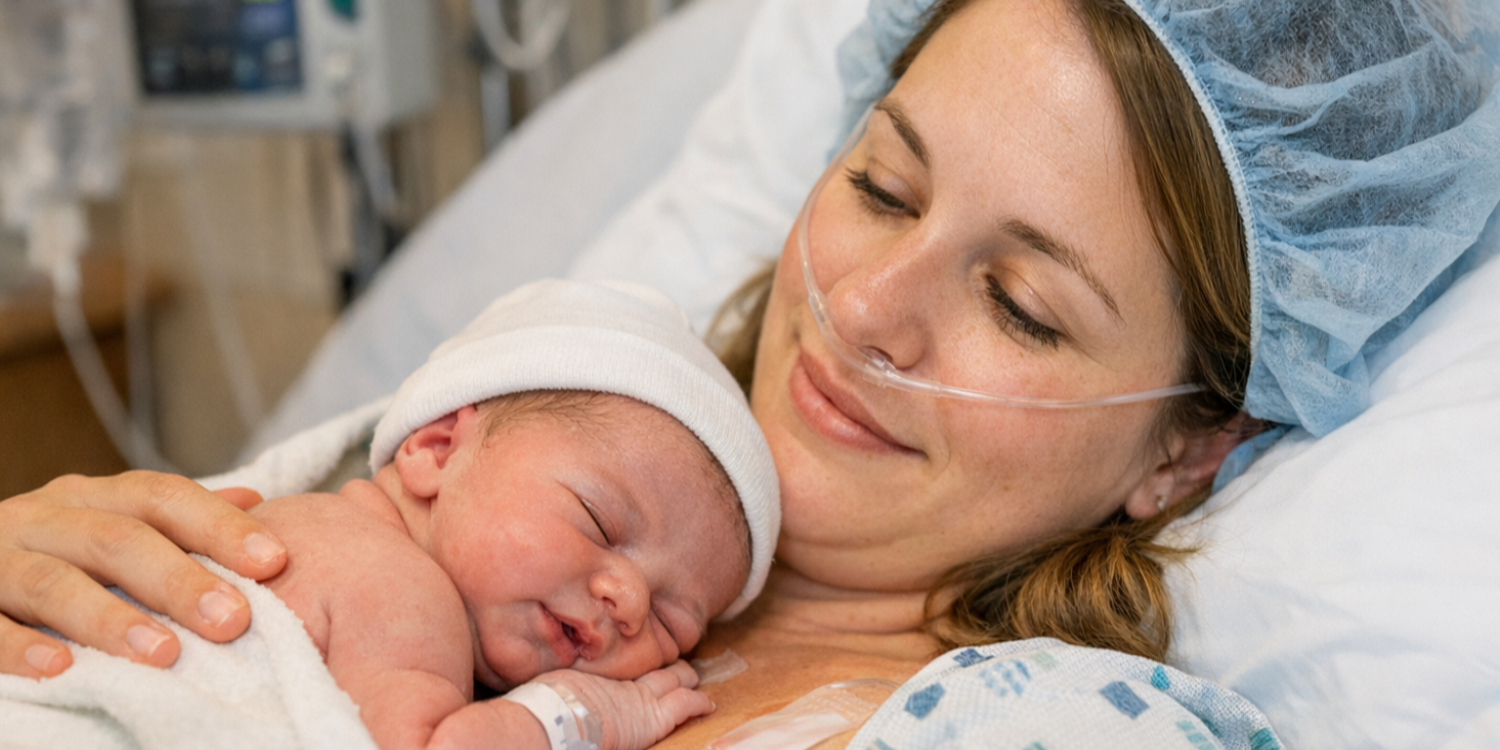
If your baby was born by caesarean section, sooner or later a question will almost automatically arise: Does it affect his gut flora - and therefore his health?
Media reports talk about a "different microbiome" in babies born by caesarean section and an increased risk of allergies or asthma. At the same time, caesarean sections have become routine in Germany and many other countries, often vital and sometimes simply the best form of birth for mother and child. Instead of building up feelings of guilt, it is worth taking a closer look at what is really known scientifically - and above all: what you can actually do.
During a vaginal birth, the baby picks up a kind of "starter pack" of maternal vaginal and intestinal bacteria on its way through the birth canal. These pioneer germs - especially bifidobacteria - pave the way for a microbiome that is ideally dominated by bifidobacteria from an early age. In a caesarean section, there is no direct contact: the baby initially comes into contact with skin and environmental germs in the operating room. In addition, the mother usually receives an antibiotic, which also reaches the baby and further influences the first days of intestinal colonization.
However, this does not mean that caesarean section babies are "lost". It just means that their microbiome starts under different circumstances - and that targeted support in the first few months can be particularly useful.
In recent years, a whole host of studies have been published that take a closer look at what a caesarean section leaves behind in the baby's gut.
A recent paper in the journal "Scientific Reports", for example, shows that important intestinal bacteria such as Bifidobacteria and Bacteroides are significantly less common in newborns born by caesarean section than in children born vaginally and that this is associated with changes in the early immune response (Effect of different delivery modes on intestinal microbiota and immune function of neonates).
Large observational studies also show a slightly increased risk of allergies, asthma and obesity in caesarean section babies. Media articles such as this one summarize the data clearly and at the same time emphasize that these are statistical increases, not a matter of fate: C-section: Disadvantages for the immune system in the child.
Two things are important here: firstly, the microbiomes of many children adapt again over the course of the first few years - especially if breastfeeding is possible and the child is exposed to a wide range of environmental stimuli that are not excessively sterile. Secondly, the caesarean section is only one of many factors that shape the microbiome. Antibiotics, diet, complementary feeding, siblings, pets and dealing with infections also play a role. Experts also urge calmness: an article in Apotheken Umschau points out that there is no such thing as "one ideal microbiome" and that the intestinal flora of caesarean section babies usually converges over the years (Changed baby intestinal flora? This is what microbiome research reveals).
At the same time, the new research opens up an opportunity: if we know where the typical gaps are in the microbiome of caesarean section babies - for example in bifidobacteria - we can provide more targeted prevention and support. This is exactly what Ventra's offer is based on: The Baby Microbiome Test uses shotgun metagenomics to measure the actual status of your baby, rather than just making assumptions. This turns abstract risk statistics into a concrete, individual basis: if your baby already has a stable bifidobacteria dominance despite a caesarean section, you can sit back and relax. If, on the other hand, the test shows clear gaps, countermeasures can be taken at an early stage - through diet, synbiotics and repeated checks.
What can you do specifically if your baby was born by caesarean section or has also received antibiotics?
Breastfeeding wherever possible Breast milk remains the strongest natural lever: it not only provides live bacteria, but also HMOs that promote the growth of bifidobacteria. If direct breastfeeding does not work, pumped milk or donor milk can be an option. The NDR article explicitly emphasizes how important early breastfeeding is for microbiome maturation (Breast milk and microbiome).
Choose formula consciously: If supplementary feeding or complete formula is necessary, look out for products with added pre- and probiotics where appropriate. An overview of formula milk and the use of FOS/GOS and HMOs can be found here: C-section and gut flora in formula milk. Important: not every special formula makes sense; seek advice and observe how your child reacts.
Use synbiotic support in a targeted manner: Ventra has developed Ventra Baby Drops, a synbiotic formulation that combines bifidobacteria strains, prebiotic substances and vitamin D3. They are specially tailored to the needs of babies and can help to close typical gaps after a caesarean section or antibiotics. As part of the Ventra subscription, tests and expert consultations are offered in addition to the drops.
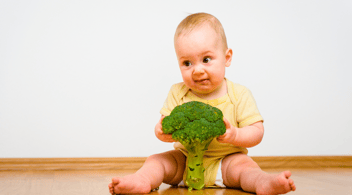
Make nutrition and complementary food microbe-friendly: As soon as complementary foods are due, you can further strengthen the microbiome with high-fiber vegetables, later whole grains and fermented foods (e.g. some natural yogurt when your baby is older and can tolerate it). The Beba article provides practical tips on which foods support the development of intestinal flora: Building baby gut flora.
Keep an eye on microbiome development: Monitoring is particularly worthwhile for pronounced risk factors: with starter and follow-up sets such as the Ventra starter set and the Ventra follow-up set, you can check after a few months whether measures are taking effect. Many parents report that not only laboratory values, but also symptoms such as skin problems or colic improve significantly.
The important thing is: You don't have to "fix" anything because you had a caesarean section. You willsimplybe givenadditional tools to support your baby in the best possible way. With knowledge about the microbiome, a targeted diet and - if necessary - synbiotic support, you can do a lot to turn a perhaps somewhat bumpy start into a smooth-running baby gut.